Stop Using The Term “Seed Oils”
It Creates Confusion & Demonises The Wrong Villain... The Term 'Ultra-Processed Oils' is a Much Better Fit All too often I see influencers and health/wellness experts using the term “Seed Oils.” Half of them don’t...



All too often I see influencers and health/wellness experts using the term “Seed Oils.” Half of them don’t know which oils it includes/excludes, and others simply use the term because they think it’s trending and can help increase their following. It's no wonder that even the 'experts' and influencers are confused... It's an inherently unclear term that makes it look like the 'seeds' are the problem. But this couldn't be further from the truth.

Very few that use the term “seed oils” know that it was a term that started being used in the early 1900’s to represent traditionally unconsumable oils that have been processed into an edible form using a series of un-natural means. To me, if something needs that much processing to become edible then that’s a good sign we shouldn’t be consuming it… ever!
For example, because of the toxic gossypol content in Cottonseeds, Cottonseed Oil was deemed unfit for human consumption and instead was originally only used to lubricate machines and fuel oil lamps. But with the advent of modern oil refining techniques, manufacturers motivated by their undying need for increased profits discovered they could remove the gossypol toxin using a series of processes that include heat, solvents, pressure, chemicals and irradiation.
What they didn’t realise back then is that the same processes that remove the toxic components of inedible oils also creates harmful by-products within the oils, makes the oils unstable and stripes the oils of their ‘good’ nutrients.
In a time where humans primarily consumed animal fats like lard, tallow and butter, as well as natural vegetable oils like olive oil, consuming oils expressed from seeds was uncommon. So it’s little wonder why they used the term “seed oils” back then to distinguish these ultra-processed oils.

Today, we seem to have re-adopted the use of the term “seed oils” to try to identify oils that’ve been put through a series of un-natural processes to deliver nutrient poor substances that are harmful to our health yet somehow deemed fit for consumption. This term would be appropriate if every single oil obtained from seeds fit this definition, but this simply isn’t the case.
Unfortunately, because most people are unaware of origin story for the term “seed oil,” it is over-used and misunderstood. And its continual incorrect use has led to people mistaking believing that the problem with these oils lies with the seeds.
We see this play out with people increasingly afraid to consume or use any type of oil originating from seeds… even in my skincare customers. Since the “seed oils” trend began I’ve increasingly experienced people concerned that my products contain oils extracted from seeds. The over-use of the term “seed oils” has people so confused that many fail to recognise that I only use highly nutritious cold pressed and minimally processed nut and seed oils (ie the good kind) in my formulas.
And this is the main problem I have with the use of this term… it’s not the “seeds” that are the problem, it’s the ultra-processing that’s the problem.

Seeds are Nutrient Dense Powerhouses

Edible seeds are some of the most nutrient packed powerhouse foods we have available to us. It’s why most nutritionists regularly recommend seed consumption as part of a well-balanced diet. Plus, foods/seeds in their natural, raw, un-processed form are some of the most nutrient-dense and nutrient-diverse foods available to us.
I’m not saying that we should be eating every single seed nature produces. Some seeds are naturally toxic to humans (like Cottonseeds and Castor Seeds), and we should never consume/apply them or their oil, especially not the highly processed, nutrient poor and unstable kind.
I’m simply saying that if a natural seed is safe for us to consume, then we should not be automatically fearing that same seed’s oil.
We should only fear the oil if it’s been ultra processed or highly refined.
Cold pressed and virgin/lightly filtered (aka minimally processed) oils expressed from edible seeds are extremely nutrient dense and perfectly fit for human use.

Extraction & Refining Methods Matter
Cold Pressed Virgin and Unrefined oils are made by simply squashing the parent seed/nut/plant at cool temperatures (cold pressed), and lightly filtering out the solids. Because no heat, solvents or other chemicals are involved, this process sustains the bioactive oil-soluble nutrients found in the raw materials. As a result, most cold pressed virgin, extra virgin and unrefined plant oils are high in nutrients like:
I like to group Virgin, Extra Virgin and Unrefined oils into a group that I call Minimally Processed Oils as it accurately reflects their minimal refinement status.
With such complex and highly nutritious profiles, we should never fear the consumption or use of Cold Pressed, Minimally Processed Oils.

Contrarily, the nutrient destructive and wasteful processes that oil manufacturers use to create the highly processed, nutrient poor and unstable oils we should be fearful of include:
Whilst industry will debate that these processes are necessary to remove toxins and other ‘un-palatable’ elements of an oil (colour, odour), mostly these processes are used to extend the shelf life (we're talking 5 years plus here), improve yield and hence increase manufacturer profits.
Plus let's not forget that this increased yield requires the input of substantially more resources (labour, time, energy and substances) in comparison to cold pressed and minimally processed oils... meaning industrial processed oils are also much more environmentally destructive.
You should always question a manufacturer who prioritises product shelf life and yield over nutrition, health and the environment.

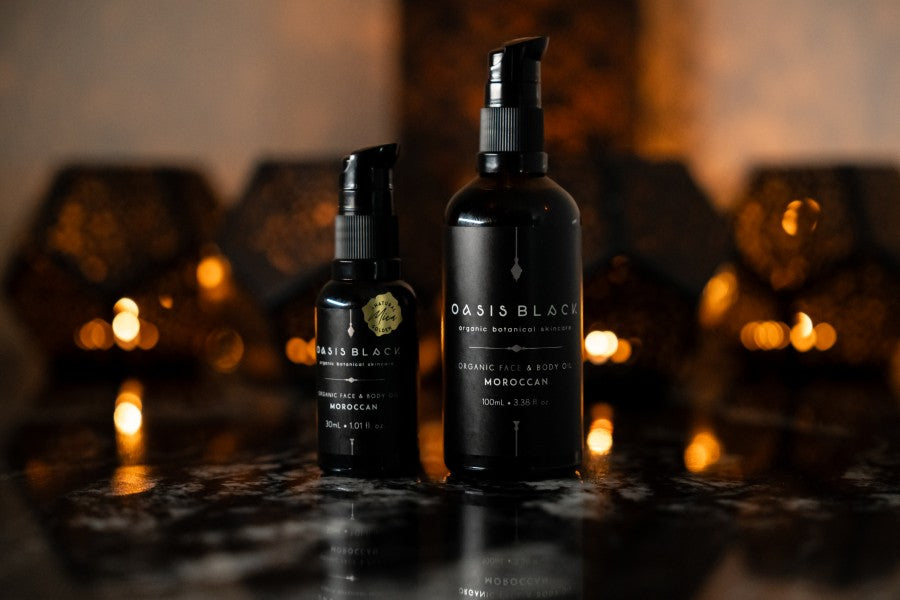
This is why at Oasis Black we deliberately choose to use only Cold Pressed and Minimally Processed, Certified Organic plant oils in our Organic Face & Body Oils and Cleansers.
Sure our oils have a shorter shelf life than other products available, but what would you prefer to feed your skin - an oil that possibly contains harmful by-products but can sit on the shelf for 5+ years because it's been stripped of all it's nutrients... or a nutrient dense oil that lasts 2-3 years (though can last longer if the storage conditions are optimised)?
Most of our customers find that 2-3 years is more than ample time to use their Oasis Black products within.
Also, because we choose to manufacture our products in small batches, you can rest assured that you'll always receive the freshest, most potent products possible (rather than ones that've been sitting on a shelf in a warehouse for 5 years).


Some “Seed Oils” Don’t Even Come From Seeds
Another grievance I have with the term “seed oils” is that there are a number of oils commonly added to this group of harmful oils that aren’t even extracted from seeds.
For example, Soybean Oil is expressed from soya beans, Corn Oil is expressed from corn kernels, and Rice Bran Oil is expressed from the outer layer of the rice grain that is removed during milling. Whist the distinction between seed, bran, bean and kernel is a technicality, it’s important when you’re dealing with people who are only looking for the words “seed oil” on a label… people looking for the words “seed oil” on a label would miss the harmful oils mentioned above because none of them contain the words “seed oil” in their name.
This highlights why the term “seed oils” is an extremely poor choice of descriptive words to use to describe the type of oils people should be avoiding.
No wonder people are consistently confused by the term “seed oils”.


Use the term“Ultra-Processed Oils” Instead
Just like we use the term “Ultra-processed Foods” to describe the over-processed, nutrient poor and harmful foods we shouldn't be eating, we should be applying the same terminology to the oil industry.
This is why I believe the term ‘Ultra-Processed Oils’ is a far more accurately descriptive term to describe the group of oils we shouldn't be using or consuming.
Not only does the term ‘Ultra-Processed Oils’ correctly identify the true villain (the ultra-processing), but it also allows for oils expressed from other plants parts, and even animals (e.g. fish oil is also an ultra-processed oil), to be correctly identified as the harmful they are if they’re ultra-processed.

How to Identify Ultra-Processed Oils
There are many different words used to describe the different types and classes of oils available for purchase today… cold pressed, solvent extracted, heat extracted, expeller pressed, refined, de-odorised, virgin, extra virgin etc. Though it’s not always clear what type of oil you’re buying from its packaging.
Most of us know that Cold Pressed Extra Virgin Olive Oil is the highest quality olive oil available. The high quality comes from the fact that it’s obtained by pressing the olives at cold temperatures, and then lightly filtering the oil to remove the sediments. Because no heat or chemical solvents are used in the production of the oil, the nutrients present in the Olives largely remain in tact in the oil... which is exactly what we want.
We can apply the same logic we use for Olive Oil to all other oils - Cold Pressed and Minimally Processed Oils are what we need to be seeking out.
Because it’s their point of difference, manufacturers producing or using premium Cold Pressed and Minimally Processed oils will want you to know and will label their products accordingly.
On the other hand, you’ll almost never see any of the other destructive and un-natural processes mentioned on product's packaging… those manufacturers don’t want you to know their product was produced using the destructive processes mentioned above. So manufacturers will simply leave these details off their packaging completely.
A good rule to follow is that if the packaging/bottle doesn’t say the oil is Cold Pressed, Virgin, Extra Virgin or Unrefined, it’s safe for you to assume that it's not... and instead that product belongs in the Ultra-Processed Oil category.
You can use this logic on oils extracted from both plant and animal sources - removing the guessing game and confusion for all oils.

So please, if you are an influencer or health/wellness industry expert advising people on the use and consumption of oils, please remove the term “seed oils” from your vocabulary and start using the term “Ultra-Processed Oils” instead.
In doing so you will no longer be inadvertently demonising all oils derived from seeds, and you won’t leave anyone guessing as to which oils derived from seeds you can and should be consuming (both internally and topically).
Win Win!

All Skin Types
MOROCCAN
SCENT PROFILE
Earth • Sweet Spice • Pepper
Extra Sensitive Skin
NUDE
NO ESSENTIAL OILS
Neutral, Slightly Nutty Scent
All Skin Types
HEMP
Hemp Seed Oil • French Blue-Green Clay
Gold Award – Zero Waste Beauty
All Skin Types
NATIVE
Kakadu Plum • Davidson Plum • Lemon Myrtle • Macadamia Oil • Australian Green Clay
All Skin Types
GOLDEN
Macadamia Oil • Mediterranean Yellow Clays
Extra Sensitive Skin
NUDE
Macadamia Oil • French Pink Clay